
What is RCM in Medical Billing? (2026 Beginner’s Guide)

If you’ve ever wondered “What is RCM in medical billing?”, you’re not alone. Revenue Cycle Management (RCM) is the backbone of healthcare finance—the process that ensures every medical service is properly documented, billed, and paid.
This guide explains what RCM means, each step in the revenue cycle, and how it affects financial performance, compliance, and patient experience across US healthcare organizations.
What “Revenue Cycle Management” (RCM) Means
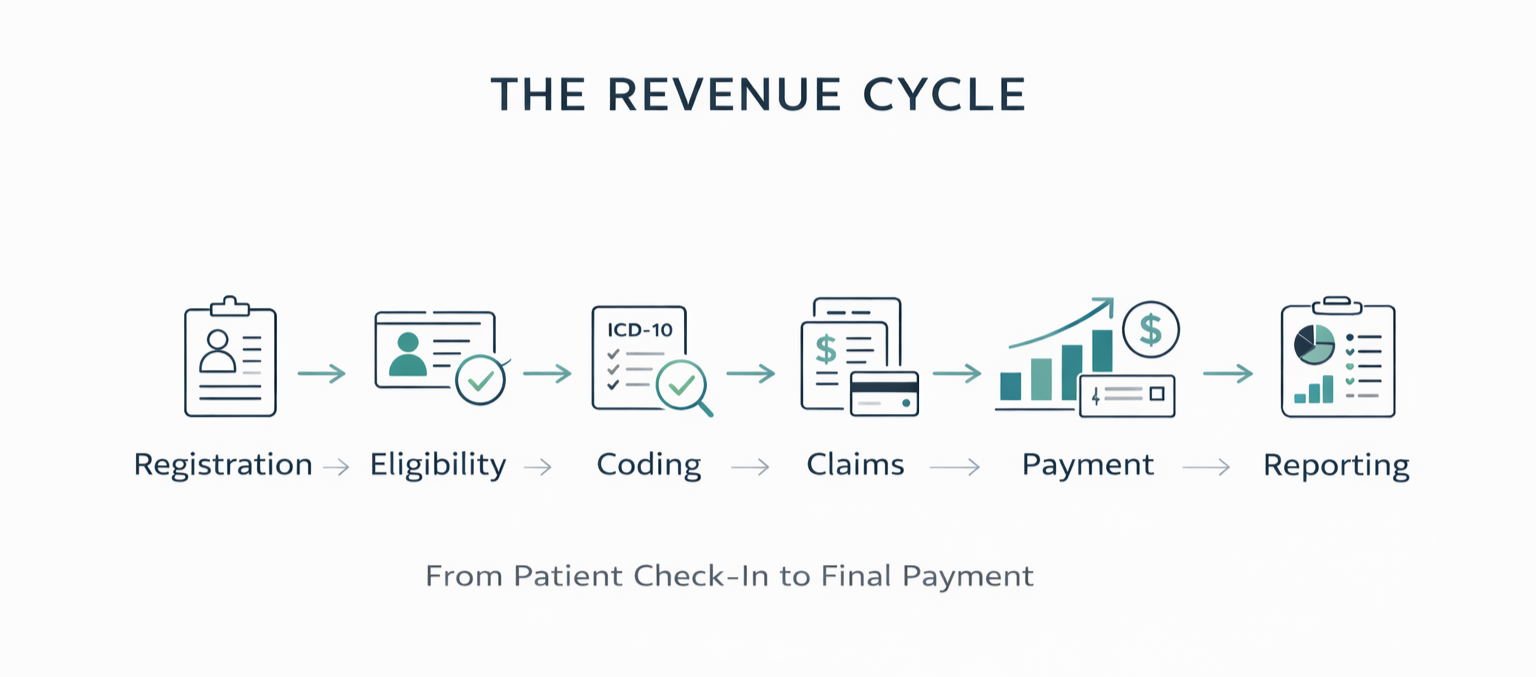
RCM is the end-to-end financial process that tracks a patient encounter from scheduling to final payment collection.
In simple terms:
RCM makes sure providers get paid accurately and on time.
It links front-end administrative work (registration, eligibility) with back-end operations (claims, denials, collections).
RCM in medical billing includes:
Capturing patient and insurance details
Coding and billing claims correctly
Submitting to payers (Medicare, Medicaid, commercial)
Managing denials and appeals
Collecting patient balances
Reporting key performance metrics (KPIs)
Done well, RCM reduces delays, prevents denials, protects patient privacy (HIPAA), and improves profitability.
Why RCM Is the Lifeline of US Healthcare
Payments involve patients, providers, insurers, clearinghouses, and strict compliance rules. Without a strong RCM process, clinics risk:
Missed revenue from lost or under-coded charges
Claim denials due to minor errors
High Days in AR (slow cash flow)
Audit issues from weak documentation
Optimized RCM stabilizes finances and frees staff to focus on care, not rework.
The Complete RCM Process (Front-, Mid-, Back-End)
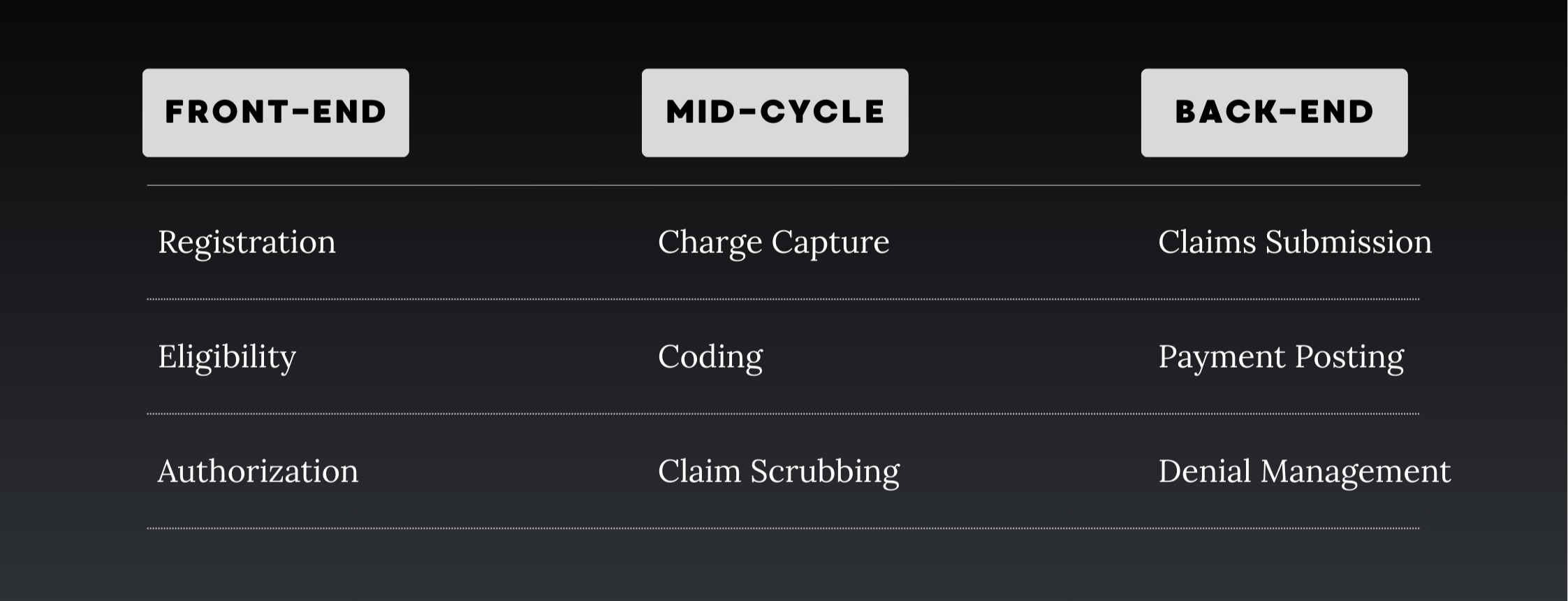
1) Front-End (Before the Visit)
Lays the foundation for clean claims:
Patient Registration: demographics, insurance, consents
Insurance Verification: eligibility, benefits, co-pays
Prior Authorization: approvals for specific services
Goal: capture accurate information to avoid denials later.
2) Mid-Cycle (During & Right After the Visit)
Accuracy here drives reimbursement:
Charge Capture: record every service/procedure/supply
Medical Coding:
ICD-10 (diagnoses)
CPT/HCPCS (procedures)
Charge Entry & Claim Scrubbing: enter codes and fix errors pre-submission
Goal: comprehensive documentation → correct coding → clean claims.
3) Back-End (After the Visit)
Where reimbursement happens:
Claims Submission: electronic, clearinghouse-ready
Payment Posting: apply ERA/EOB responses and adjustments
Denial Management: correct, appeal, and fix root causes
Accounts Receivable (AR) Recovery: proactive follow-ups; aim for Days in AR < 30 and AR > 90 days < 8%
Patient Collections: clear statements, payment plans, secure portals
Goal: every claim results in accurate, timely payment.
Visualizing the RCM Workflow
Registration → Eligibility → Charge Capture → Coding → Claim Submission → Payment Posting → Denial Management → AR Recovery → Patient Collections → Reporting & Compliance
Front-office accuracy + back-office efficiency = a healthy revenue cycle.
RCM in Action: Two Quick Examples
Small Primary Care Practice (2 providers)
Automated eligibility + certified coders
Results: first-pass acceptance ~97%, Days in AR 45 → 27, denials −35%
Multi-Location Diagnostic Center
Centralized RCM for imaging/labs/pathology; pre-billing audits
Results: duplicate CPT denials curbed; denials −28%; real-time KPI dashboards across sites
Key Ingredients of a Successful RCM Strategy
Technology Integration
Unified EHR + billing + clearinghouse; automate eligibility, scrubbers, and auto-posting.Skilled People
AAPC/AHIMA-certified coders, experienced billers, and AR specialists.Analytics & Reporting
Real-time dashboards for denial rate, Days in AR, clean claim rate; fix bottlenecks fast.Compliance & Security
HIPAA-compliant processes, SOC 2-grade hosting, encryption, access control, routine audits.Patient Engagement
Clear statements, online payments, payment plans, and multilingual support.
What’s New in RCM for 2026

AI-assisted denial prediction before submission
RPA for automated claim status checks and follow-ups
Real-time executive dashboards for finance leaders
Expanded telehealth billing rules and CPT updates
Stronger HIPAA/cybersecurity expectations
Offshore RCM scale-ups (e.g., Sri Lanka) with bilingual, certified teams
Common RCM Problems—and Fast Fixes
High Denial Rate → automate eligibility; coder QA/audits
Long Days in AR → segment AR, cadence follow-ups, automate reminders
Missed Charges → charge reconciliation reports; provider education
Posting Errors → auto-post ERAs; lock down adjustment rules
Weak Patient Collections → simpler statements; digital/PCI-compliant portals
Essential Revenue Cycle KPIs (Targets)
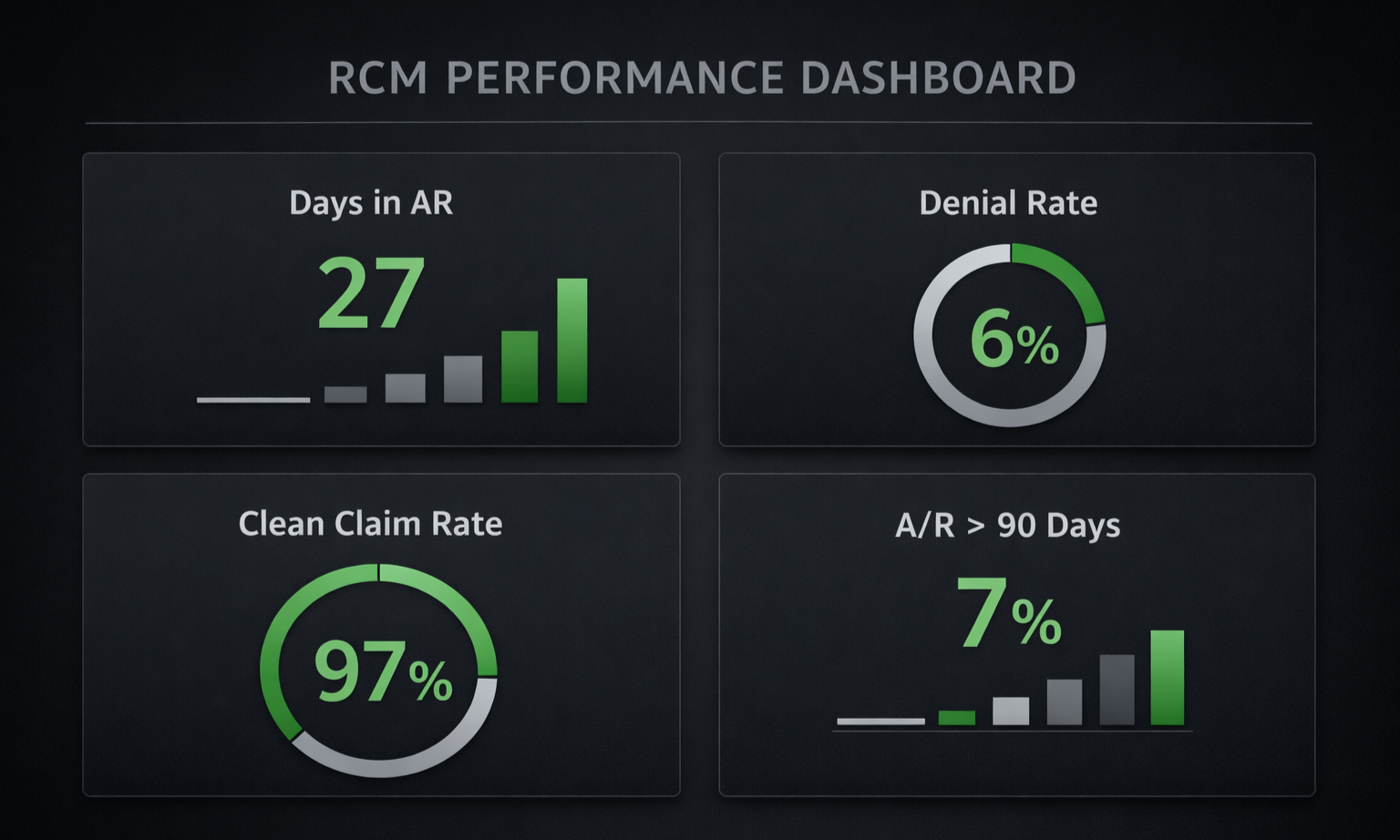
Days in AR: < 30 (cash speed)
Denial Rate: < 10% (process accuracy)
First-Pass Acceptance: > 95% (billing quality)
Net Collection Rate: > 95% (revenue efficiency)
Charge Capture Accuracy: > 98% (no missed revenue)
AR > 90 Days: < 8% (financial health)
Small Practices vs Multi-Location Clinics
Staffing: generalists who multitask vs specialized teams
Outsourcing: coding/billing common vs hybrid models
Technology: simpler PM/EHR vs enterprise-grade integrations
Reporting: monthly summaries vs real-time dashboards
AR Strategy: outsourced follow-ups vs dedicated AR & analytics units
How to Improve Your RCM (Step-by-Step)
Audit the current workflow; pick your top 3 bottlenecks
Automate eligibility and scrubbing
Train on ICD-10/CPT and documentation best practices
Monitor KPIs weekly; publish dashboards
Do denial root-cause reviews and fix the sources
Offer digital payments for faster patient collections
Hold quarterly RCM reviews with your team/vendor
HIPAA-Compliant RCM Practices
Encrypt all PHI (at rest & in transit)
Role-based access and least-privilege controls
BAAs with every covered vendor
Tested backups and disaster recovery
Ongoing workforce compliance training
Real-World Impact: Case Study Snapshot
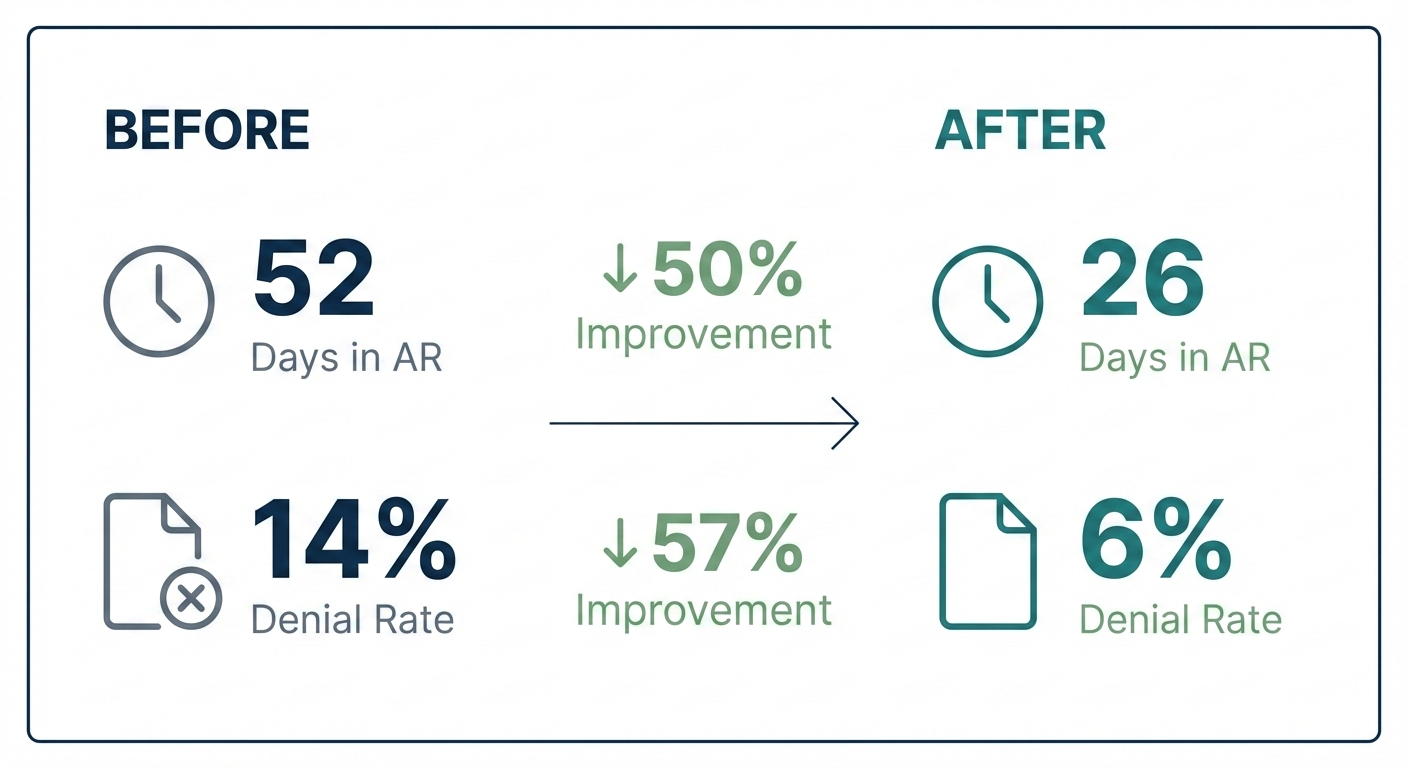
Multi-specialty clinic (Texas) + offshore RCM (Sri Lanka)
Days in AR: 52 → 26
Denial Rate: 14% → 6%
Payment Posting Timeliness: +40%
Net Collections: +18%
Why it worked: automation + continuous KPI tracking + compliance-first discipline.
Final Thoughts: RCM as a Growth Engine
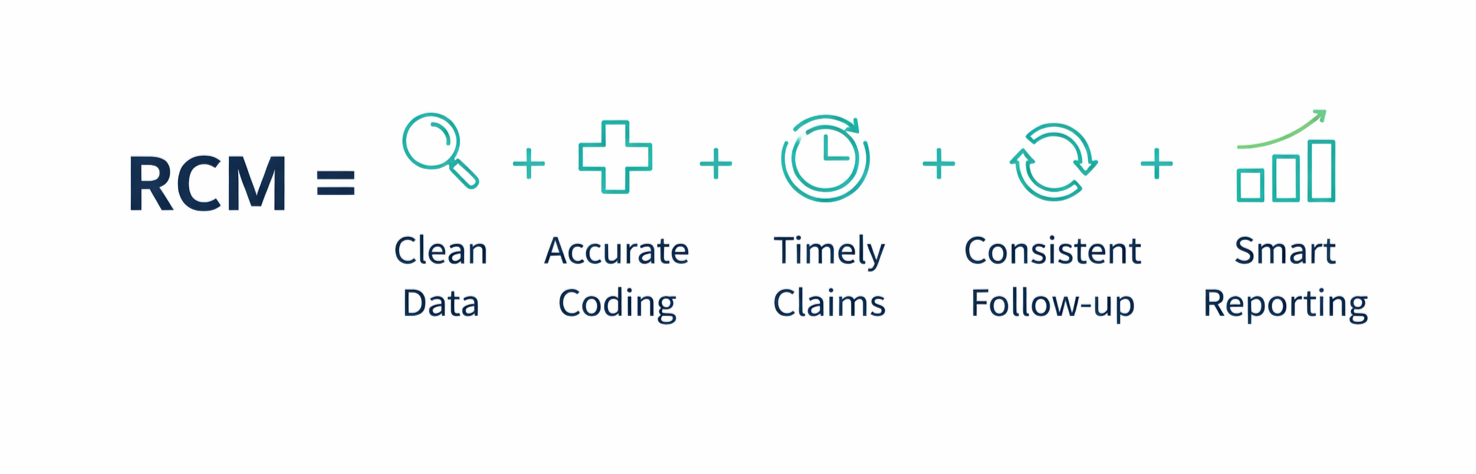
RCM is more than “billing.” In 2026 the winning formula blends human expertise, automation, and data-driven decisions to keep revenue predictable and patient trust intact.
FAQs: RCM in Medical Billing (Beginner)
Q1. What is RCM in simple terms?
The process healthcare organizations use to get paid for patient services—from registration to final payment.
Q2. What are the main steps?
Registration → Eligibility → Charge Capture → Coding → Claim Submission → Payment Posting → Denial Management → AR Recovery → Patient Collections.
Q3. Is RCM the same as medical billing?
No. Billing is one piece. RCM covers the entire financial journey, including denials, AR, and analytics.
Q4. Why do claims get denied?
Eligibility errors, missing authorizations, coding mistakes, and incorrect modifiers are common causes.
Q5. How can small clinics improve RCM?
Automate eligibility, use claim scrubbers, outsource coding if needed, and track Days in AR weekly.
Q6. Must-have tools in 2026?
Integrated EHR, clearinghouse, denial management platform, KPI dashboards, and secure payment portals.
Q7. How does HIPAA affect RCM?
Vendors must protect PHI with encryption, access controls, and BAAs; providers must train staff and audit routinely.
Q8. Biggest trend right now?
AI-assisted denial management and real-time KPI dashboards.
Q9. Should practices outsource RCM?
Often yes—especially for smaller practices. Choose HIPAA-compliant, US-focused partners with proven metrics.
Q10. What is the “clean claim rate”?
The % of claims accepted on first submission without rejection/denial—a core quality metric.
