
The 2026 Ultimate Guide to RCM Outsourcing — When Healthcare Providers Should Consider a Billing Partner

Outsourcing revenue cycle management has become a strategic growth lever for healthcare practices facing rising costs, payer complexity, and staffing challenges.
But outsourcing is not the right choice for every organization.
This guide helps practices determine exactly when outsourcing delivers the highest financial impact — and how to choose the right partner.
1. When Denials Remain High Despite Internal Efforts
If a practice has:
Rising denial trends
Recurring rejections
Slow appeal turnaround
…it signals internal process limitations.
2. When Billing Staff Turnover Is Disrupting Cash Flow
Replacing billers is expensive and time-consuming.
Outsourcing removes the risk.
3. When AR Is Growing and Payments Are Slowing Down
If AR > 60 days is increasing, outsourcing provides:
Dedicated AR specialists
Payer escalation teams
Faster denial resolution
4. When the Practice Is Scaling or Adding New Providers
Growth creates billing volume that internal teams may not keep up with.
5. When Providers Want to Improve Profitability Without Hiring More Staff
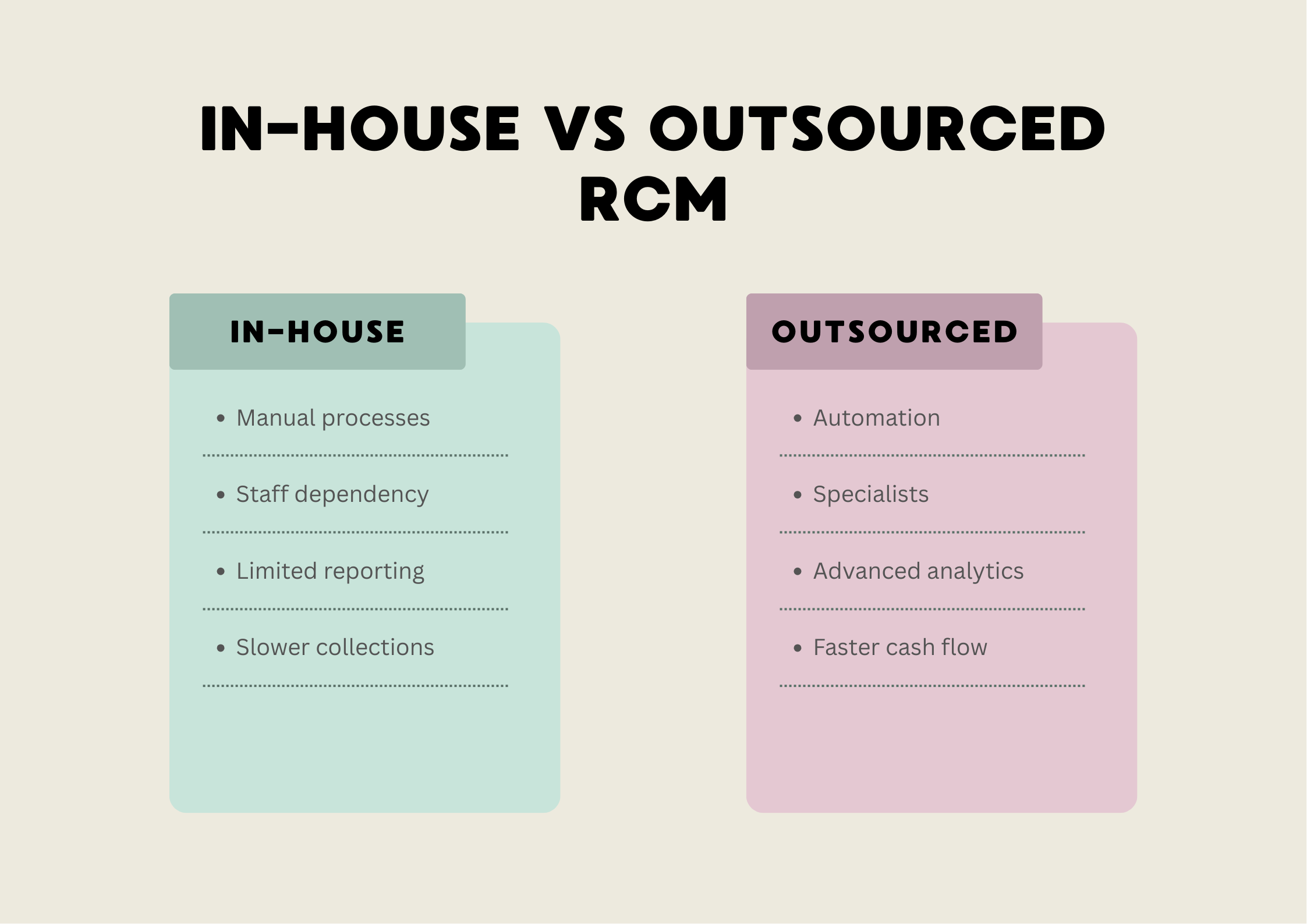
Outsourcing converts fixed labor costs → variable, predictable costs tied to performance.
6. When Payer Rules Change Faster Than the Team Can Respond
A modern RCM partner continuously updates:
Coding changes
LCD/NCD updates
Payer policy changes
Authorization rules
This level of monitoring is hard to do in-house.
7. When You Need Better Reporting & Visibility
Practices outsource when they need:
Denial dashboards
KPI monitoring
Underpayment analytics
Charge lag reports
These tools improve financial decision making.
8. When Compliance Risk Is Increasing
A strong RCM partner reduces risk with:
Coding audits
Documentation checks
HIPAA/PHI compliance protocols
Audit-ready workflows
RCM outsourcing is not about giving up control — it’s about gaining expertise, technology, and scalability.
The right partner strengthens collections, stabilizes cash flow, and gives providers the freedom to focus on patient care instead of billing.
