
AI-Powered Denial Prevention: How Predictive Analytics Is Transforming Revenue Cycle Management in 2026

Introduction
For years, healthcare revenue cycle teams have operated in reaction mode. A claim gets denied. Staff investigate. Corrections are made. Appeals are submitted. Payment is delayed.
This traditional model treats denials as an unavoidable cost of doing business.
In 2026, that mindset is rapidly changing.
Advances in artificial intelligence and predictive analytics now allow healthcare organizations to identify claim risks before submission, preventing denials rather than chasing them. Instead of repairing revenue leaks after they occur, leading providers are sealing them in advance.
Predictive denial prevention is quickly becoming one of the most powerful performance drivers in modern revenue cycle management.
Why Traditional Denial Management Is No Longer Enough
Even highly skilled billing teams struggle to keep up with:
Constantly changing payer rules
Increasing documentation requirements
Complex coding structures
Authorization variations across plans
Growing claim volumes
Manual review processes simply cannot analyze thousands of variables across millions of claim combinations in real time.
The result:
Preventable denials
Delayed reimbursements
Administrative overload
Revenue instability
Fixing denials after they occur is expensive. Preventing them before submission is transformative.
What Is Predictive Denial Prevention?
Predictive denial prevention uses artificial intelligence and machine learning to analyze historical claim data, payer behavior, coding patterns, and documentation requirements.
The system identifies risk signals such as:
Coding combinations likely to trigger rejection
Missing or incomplete documentation
Eligibility mismatches
Authorization inconsistencies
Payer-specific rule conflicts
Historical denial patterns
When risk is detected, the system flags the claim before submission so corrections can be made immediately.
Think of it as a real-time revenue protection engine working behind the scenes.
How Predictive Analytics Works in the Revenue Cycle
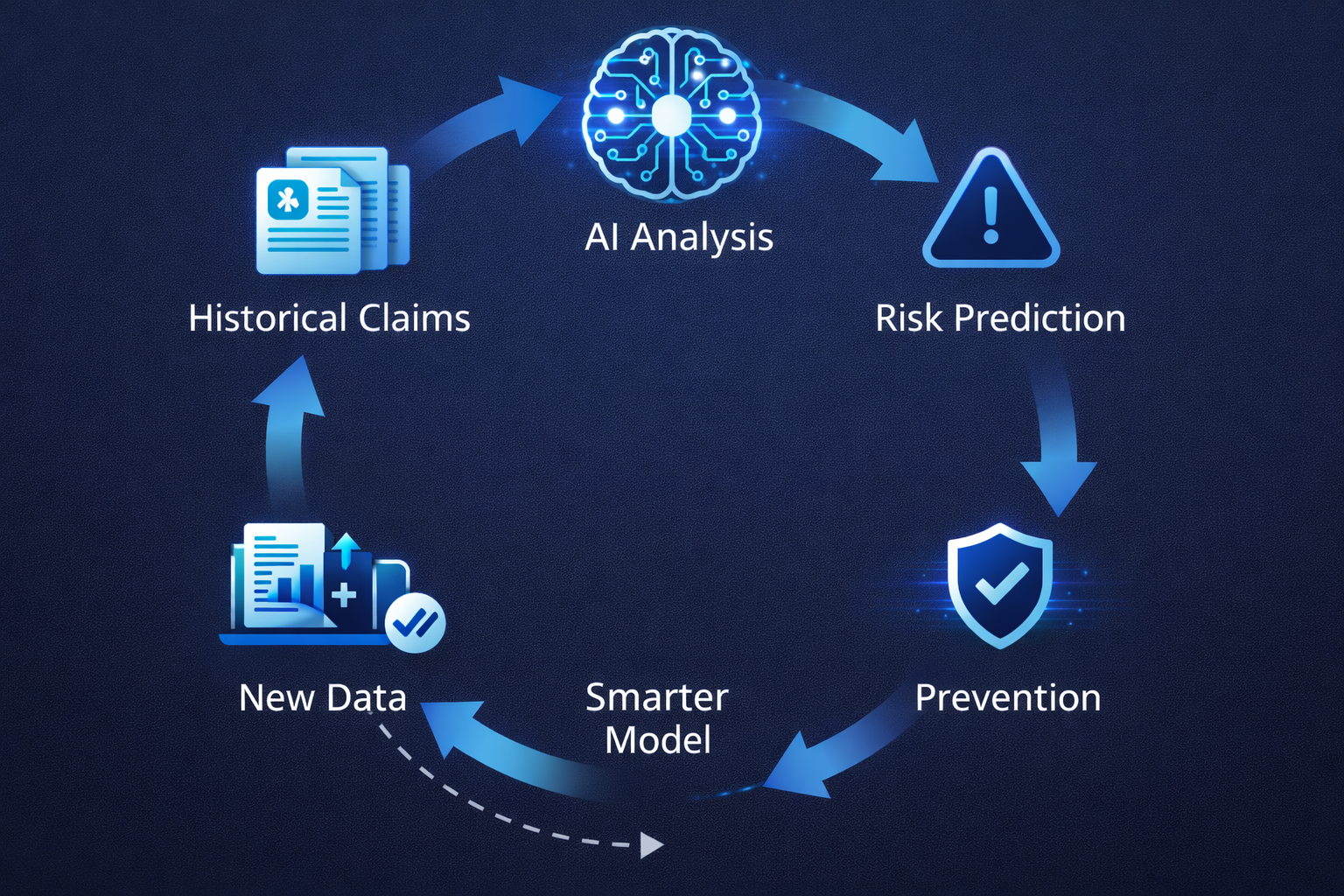
1. Pattern Recognition Across Historical Claims
AI models learn from past submissions, identifying which claim characteristics most often lead to denials.
2. Real-Time Claim Risk Scoring
Each new claim is evaluated and assigned a risk score before it is transmitted to the payer.
3. Automated Alerts and Recommendations
Billing teams receive guidance on what needs correction, such as documentation gaps or modifier issues.
4. Continuous Learning
The system adapts as payer rules evolve, improving accuracy over time.
The result is a revenue cycle that becomes smarter with every claim processed.
The Financial Impact of Denial Prevention
Predictive denial prevention delivers measurable improvements across key performance metrics.
Healthcare organizations typically experience:
Higher first-pass claim acceptance rates
Faster reimbursement cycles
Reduced appeal workload
Lower administrative cost per claim
Improved net collections
More predictable cash flow
Even small reductions in denial rates can produce significant annual revenue gains when applied across large claim volumes.
Operational Benefits Beyond Revenue
The value of predictive analytics extends beyond financial performance.
Reduced Staff Burnout
Billing teams spend less time investigating avoidable denials and more time on high-value work.
Faster Patient Billing Resolution
Clean claims mean fewer delays, improving patient financial experience.
Stronger Compliance
Automated validation ensures documentation and coding accuracy.
Scalable Growth
As claim volume increases, predictive systems maintain consistency without increasing staffing.
Where Predictive Denial Prevention Has the Greatest Impact
Healthcare organizations benefit most when they experience:
High claim volume across multiple payers
Frequent policy or coding changes
Complex specialty billing requirements
Rapid practice growth
Persistent denial patterns
Limited internal analytics capabilities
These environments generate massive data complexity, which predictive systems are uniquely designed to manage.
The Technology Behind Predictive Revenue Protection

Modern predictive RCM platforms combine:
Machine learning models
Real-time claim validation engines
Automated rule monitoring
Payer behavior analytics
Integrated reporting dashboards
This technology transforms billing from a reactive workflow into an intelligent decision system.
The Future of Revenue Cycle Management
Healthcare reimbursement is becoming more complex each year. Payer scrutiny is increasing. Documentation standards are tightening. Financial margins are narrowing.
In this environment, reactive billing models are no longer sustainable.
Predictive denial prevention represents the next phase of revenue cycle maturity, where data intelligence guides every claim decision before submission.
Organizations that adopt predictive strategies today are building faster, more resilient, and more scalable financial operations for the future.
Final Thoughts
Denials will always exist, but preventable denials do not have to.
Predictive analytics allows healthcare providers to move from correction to prevention, from delay to acceleration, and from uncertainty to control.
In 2026, the most successful revenue cycle strategies are not just efficient. They are intelligent, proactive, and continuously learning.
Denial prevention is no longer just a billing improvement. It is a competitive advantage.
